Blog
Best Fertilizer for Rare Tropical Plants

Fertilizer for rare plants is less about feeding more and more about feeding right. Rare aroids and tropicals are often slow, expensive growers with sensitive roots, and a heavy hand with the bottle can do more harm than good. The goal is steady, gentle nutrition that matches the plant, the season and the light it gets.
This guide skips the guesswork. You will find a quick chooser to match feeds to your goals, honest reviews of the products we stock, a year-round feeding calendar, and clear signs of too much or too little. Always follow the label on any product you buy, since concentrations and directions vary.
The short list
Foliage plants: a balanced foliage nutrient such as GT Foliage Focus. Flowering plants: GT Flower Focus. Roots and cuttings: Rootzone. Set-and-forget feeding: Boosted Aroid Soil Mix with time-release fertilizer. Extras: GT Silica and GT Foliar.
On this page: Fertilizer Chooser: Match the Feed to Your Goal · How Fertilizer for Rare Plants Works: NPK in Plain English · Our Picks Reviewed: Fertilizer for Rare Plants · Fertilizer for Rare Plants by Genus · Water, Mix and Fertilizer for Rare Plants: How They Interact · Feeding in Semi-Hydro and LECA · Liquid, Slow-Release or Organic? · A Year-Round Feeding Calendar · How to Mix and Apply Fertilizer for Rare Plants · A Sample Month of Feeding · Signs You Are Overfeeding or Underfeeding · Special Cases: Cuttings, Variegated Plants and New Arrivals · Storing and Handling Plant Fertilizer Safely · Common Fertilizer Mistakes to Avoid · The Bottom Line on Fertilizer for Rare Plants
Fertilizer Chooser: Match the Feed to Your Goal
Start with what you want to achieve. This chooser matches each goal to a product and shows how it is used.
| Your goal | Our pick | Why | How it is used |
|---|---|---|---|
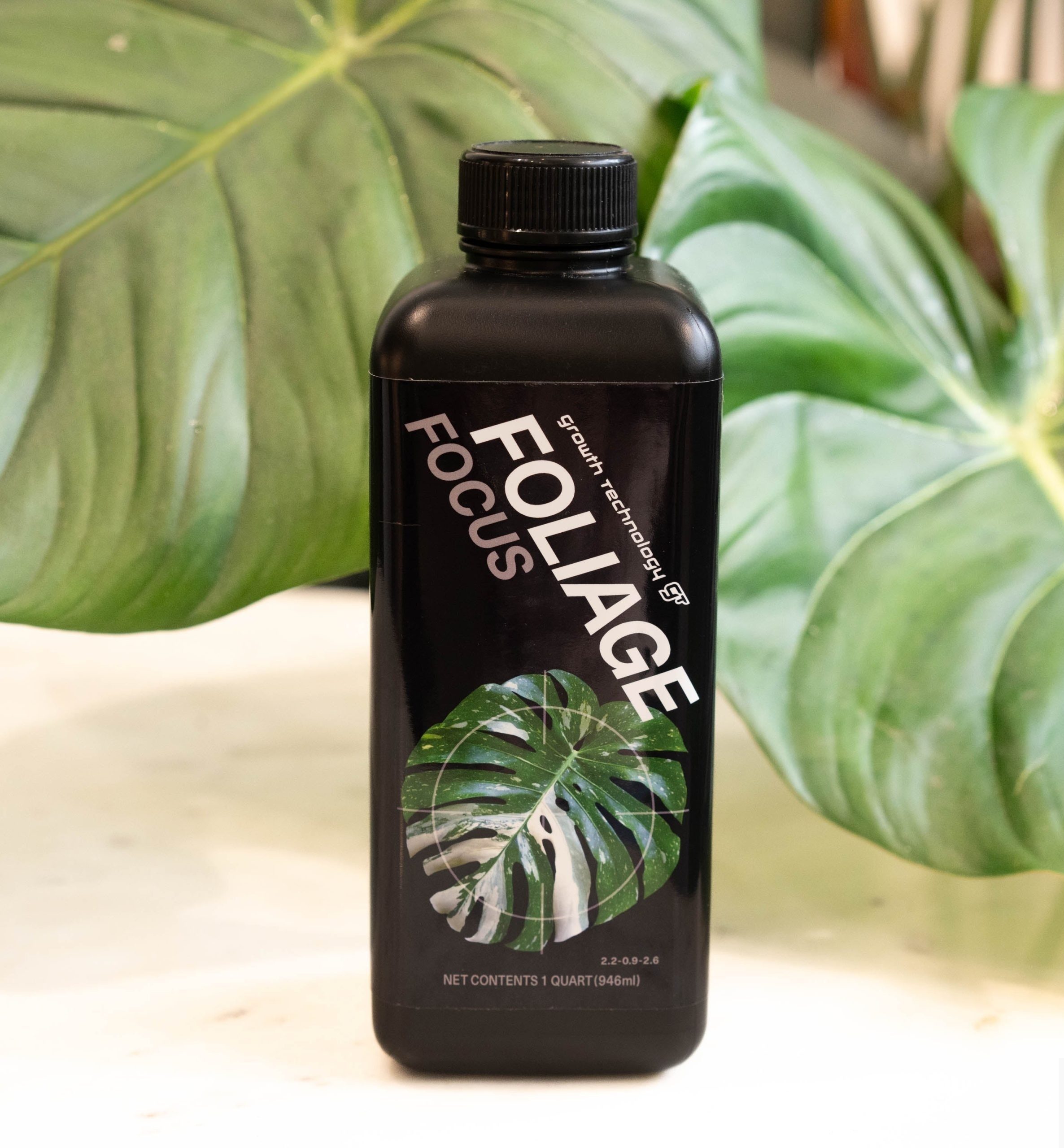
| Lush leaves on non-flowering plants | GT Foliage Focus | Balanced nutrition for foliage, free from sodium, chlorides and urea | 3 to 5 ml per liter in soil, at each watering |
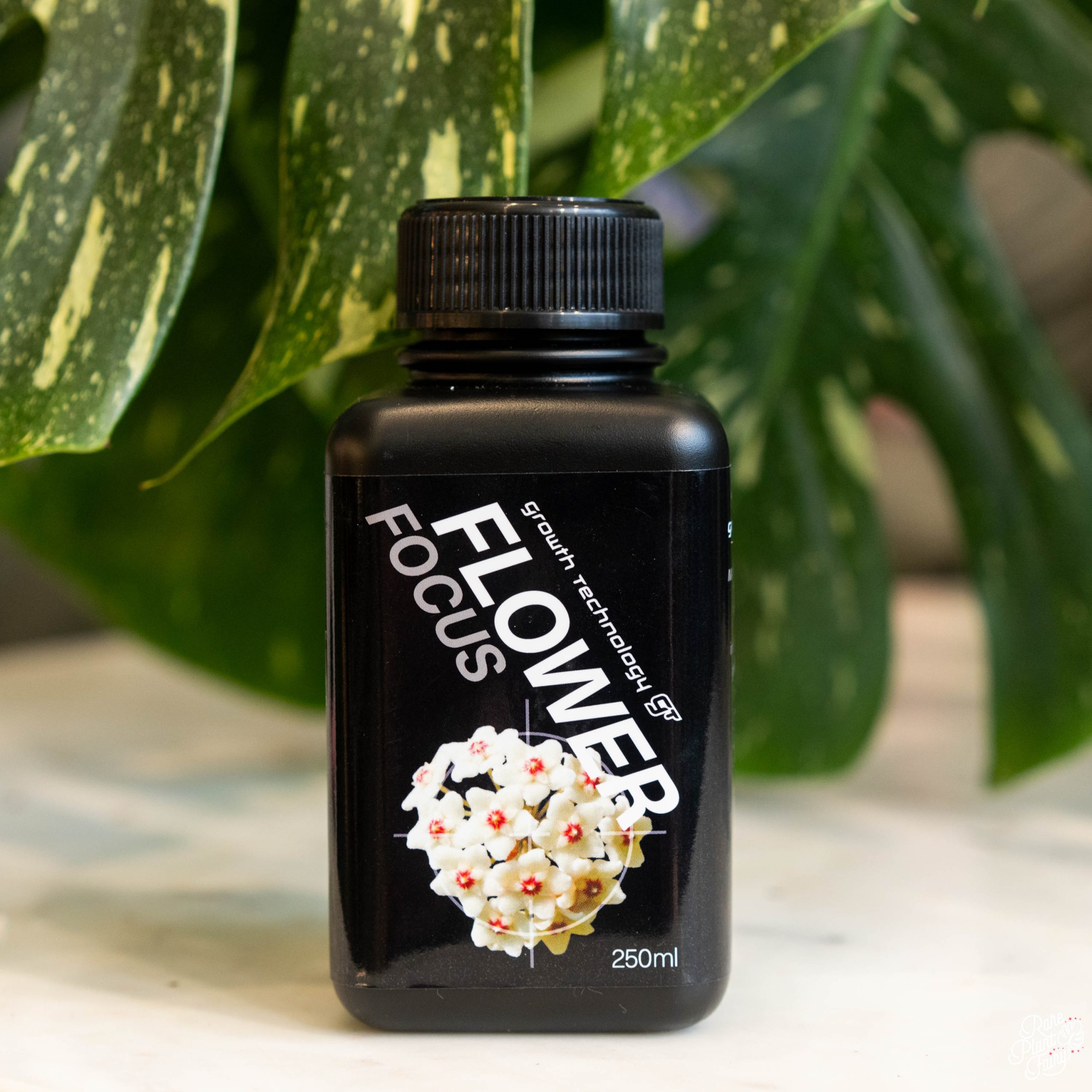
| More flowers | GT Flower Focus | Formulated to encourage flower formation | 3 to 5 ml per liter in soil, at each watering |
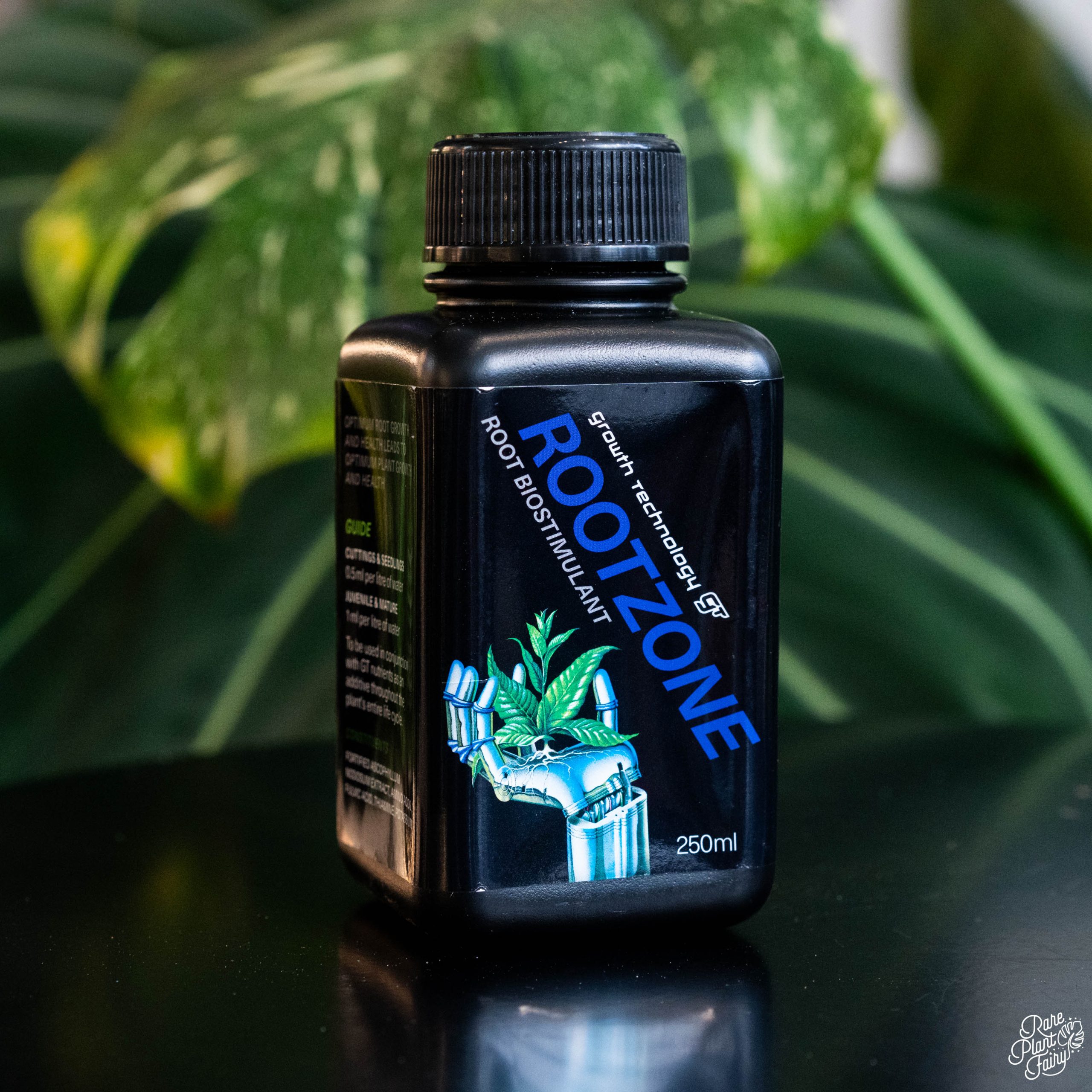
| Stronger roots, cuttings and seedlings | Rootzone | Root biostimulant for the whole life cycle | 0.5 ml per liter for cuttings and seedlings, 1 ml for juvenile and mature plants |
| Tougher, more resilient leaves | GT Silica | Potassium silicate that supports resistance to pathogens | 1/2 tsp per quart in soil |
| A quick leaf top-up | GT Foliar | Ready-to-use leaf spray with chelated trace elements | Fine mist on leaves |
| Easy, set-and-forget feeding | Boosted Aroid Soil Mix | Includes 14-4-14 time-release fertilizer | Pot up and feed gradually |
Quantities come from each product label, so always check the current directions before you mix.
How Fertilizer for Rare Plants Works: NPK in Plain English
Fertilizer labels show three numbers, called the NPK ratio. They stand for nitrogen, phosphorus and potassium.
- Nitrogen (N) drives leafy growth and green color.
- Phosphorus (P) supports roots and flowering.
- Potassium (K) supports overall vigor, flowering and resilience.
Foliage-focused aroids generally want a balanced feed with plenty of nitrogen, while flowering plants like Hoya benefit from more phosphorus and potassium. Good products also include trace elements such as iron, magnesium and calcium, which plants need in tiny amounts.
Reading a fertilizer label
Labels show an analysis, the percentages of each nutrient. For example, the listing for Flower Focus shows nitrate-nitrogen 1.8, phosphorus 0.5 and potassium 3.0, so potassium leads, which suits flowering. Compare analyses rather than marketing claims when you choose fertilizer for rare plants, and remember that concentrated products must be diluted.
Our Picks Reviewed: Fertilizer for Rare Plants
GT Foliage Focus: Best for Lush Leaves
Foliage Focus is a concentrated nutrient made for non-flowering plants, designed to support strong leaf development, rich color and overall vitality. It suits aroids and other foliage plants, and the label notes it is free from sodium, chlorides and urea, so it is gentle enough for regular use in soil, hydroponic and semi-hydro systems. Use 3 to 5 ml per liter in soil at every watering, flush with plain water once a month, and raise the strength gradually as plants mature.
GT Flower Focus: Best for Blooms
Flower Focus encourages abundant flower formation and suits flowering potted plants such as Hoya. It follows the same dilution as Foliage Focus, with the same advice to flush monthly. Switch to it when your plant is mature enough to bloom and in bright light.
Rootzone: Best for Roots and Cuttings
Rootzone is a root biostimulant with marine and plant extracts, fulvic acid and select vitamins and minerals. It is made to be used with Growth Technology nutrients throughout a plant's life, at 0.5 ml per liter for cuttings and seedlings and 1 ml per liter for juvenile and mature plants. Store it in a cool, dark place, and refrigerate if possible.
GT Silica: Best for Resilience
Silica is a concentrated potassium silicate. It is described as helping plants resist pathogens and grow stronger, more vibrant leaves. Use 1/2 tsp per quart of water in soil, or 1 tsp per quart in semi-hydro. Add it to plain water first, stir well, rest it for 15 minutes, then add your nutrient and adjust the pH to about 6.
GT Foliar: Best Leaf Top-Up
Foliar is a ready-to-use spray that delivers nutrients straight to the leaves, with a balanced mineral profile, chelated trace elements and amino acids. Think of it as a supplement for fast pick-me-ups, not a replacement for feeding the roots.
Boosted Aroid Soil Mix: Best Set-and-Forget Option
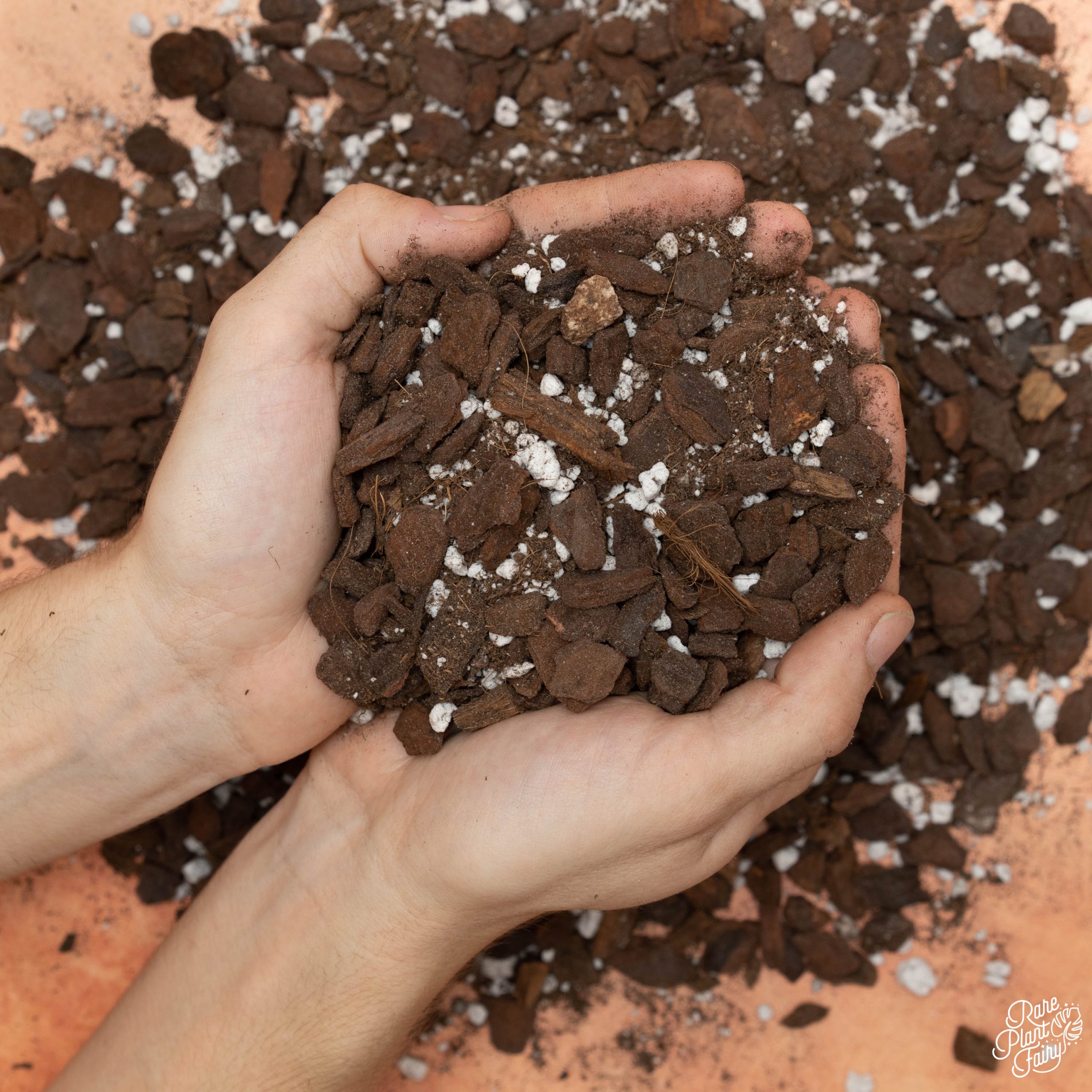
If you prefer to feed less often, the Boosted Aroid Soil Mix includes a 14-4-14 time-release fertilizer in a light, airy blend of perlite, New Zealand pine bark and sphagnum peat moss, with a pH range of 5.0 to 7.0. It pairs well with the recipes in our aroid soil mix guide.
Browse every option in our Pots and Supplies collection.
Fertilizer for Rare Plants by Genus
Different groups of aroids and tropicals eat differently. Treat these as general starting points and adjust to your own plants.
| Plant | Feeding style | Tip |
|---|---|---|
| Anthurium | Moderate, with sensitive roots | Use weak, regular feeds and flush often |
| Alocasia | Hungry during active growth | Feed steadily in spring and summer, and ease off in winter |
| Philodendron and Monstera | Moderate feeders | Feed lightly through the growing season |
| Hoya | Light feeders | Use a bloom feed on mature plants in bright light |
| Plantlets and cuttings | Very light until established | Wait for new growth before feeding |
Explore our Anthurium collection and Alocasia collection to see how these plants grow.
Water, Mix and Fertilizer for Rare Plants: How They Interact
Fertilizer does not work alone. The water you use and the mix your plant grows in change how much feeding it needs.
- Hard tap water already contains minerals, which can build up with fertilizer. Filtered or low-mineral water gives you more control.
- Very soft or reverse osmosis water may lack calcium and magnesium, so check that your fertilizer supplies them.
- Bark-based mixes hold few nutrients, so plants in chunky aroid mixes usually need more regular feeding.
- Coco coir can hold salts and may need occasional flushing.
- pH matters. Most aroids take up nutrients best at a slightly acidic pH, roughly 5.5 to 6.5.
Pair your feeding with a well-built mix, such as the recipes in our aroid soil mix guide, so roots can use what you provide.
Feeding in Semi-Hydro and LECA
Plants grown in clay pebbles or other inert media get all their nutrients from the water, so they need a complete nutrient solution every time. Use the hydroponic or semi-hydro dilution on the label, keep the reservoir fresh, and flush the media regularly to prevent salt build-up. Start at the lower end of the range and increase slowly as roots establish.
Liquid, Slow-Release or Organic?
| Type | How it works | Pros | Watch out for |
|---|---|---|---|
| Liquid concentrate | Mixed into water and applied at watering | Precise control, quick results | Easy to overdo, needs regular use |
| Slow or time-release | Granules release nutrients gradually | Low effort, steady feeding | Hard to adjust once mixed in |
| Organic (castings, emulsions) | Feeds soil life and plants slowly | Gentle, builds soil | Variable strength, can smell |
Many growers combine them: a time-release mix as the base, and a diluted liquid feed during peak growth. Follow the label for each, and do not stack products at full strength.
A Year-Round Feeding Calendar
Plants grow fastest in spring and summer and slow down in winter, so your feeding should follow. Use this calendar as a starting point.
| Season | How often | Strength | Notes |
|---|---|---|---|
| Spring | Every watering or every second watering | Low, then rising | Start as new growth appears |
| Summer | Every watering | Full label strength at most | Flush with plain water monthly |
| Autumn | Every second or third watering | Reduce | Growth is slowing |
| Winter | Rarely or not at all | Very low or none | Low light means low demand |
How to Mix and Apply Fertilizer for Rare Plants
- Start with plain water. Use filtered or low-mineral water if your tap water is hard.
- Add products in order. Mix silica first, rest it, then add your nutrient.
- Measure carefully. Start at the low end of the label range.
- Check the pH. Aim for roughly 5.5 to 6.5, and adjust if needed.
- Water the mix, not dry roots. Moisten the soil first if it is very dry.
- Flush monthly. Run plain water through the pot to wash out built-up salts.
A Sample Month of Feeding
Here is a simple routine for one mature plant in spring or summer, using a liquid concentrate. It shows how fertilizer for rare plants fits into normal watering.
| Week | What to do |
|---|---|
| Week 1 | Water with a diluted feed at the low end of the label range |
| Week 2 | Water with plain water, then feed again at the next watering |
| Week 3 | Feed at the same low strength and watch the leaves |
| Week 4 | Flush thoroughly with plain water to wash out salts, then repeat the cycle |
Adjust the rhythm to your plant. A plant in bright light and a fast-draining mix can take more, while a plant in low light needs much less.
When you are not sure
If you are unsure how much to give, use a quarter to half of the label strength and increase slowly. It is far easier to add more later than to recover from burned roots. Take notes, watch new leaves for color and size, and adjust one thing at a time.
Signs You Are Overfeeding or Underfeeding
Too much fertilizer
- Brown, crispy leaf tips or edges
- A white crust of salt on the soil or pot rim
- Wilting despite moist soil
- Sudden leaf drop after feeding
Too little fertilizer
- Pale or yellowing older leaves
- Slow growth in the growing season
- Small new leaves
- Faded color
If you spot overfeeding, flush the pot with plenty of plain water and pause feeding for a few weeks. For more routine care help, visit our Plant Care hub.
Special Cases: Cuttings, Variegated Plants and New Arrivals
- Fresh cuttings and plantlets: Wait until new growth appears, then feed very lightly. Our tissue culture beginners guide covers the acclimation stage.
- Variegated plants: Some growers report that heavy nitrogen can reduce variegation, so feed gently and give bright light.
- New or repotted plants: Hold off for a few weeks while roots settle, especially if the mix already contains fertilizer.
- Stressed or sick plants: Fix the problem first. Fertilizer does not cure root rot or pests.
Storing and Handling Plant Fertilizer Safely
Concentrated plant nutrients deserve the same care as any household chemical. Store them in their original bottles, in a cool, dark place, and keep them well out of reach of children and pets. Some products, such as Rootzone, are best refrigerated if possible, so check the label.
Wear gloves when mixing, never combine products that the label does not allow, and measure rather than eyeballing. Wipe up spills right away, and never pour unused solution into a stream or drain. Safe handling keeps both you and your plants healthy.
Common Fertilizer Mistakes to Avoid
- Feeding at full strength from day one
- Fertilizing in low light or in winter dormancy
- Stacking several products at full strength
- Skipping the monthly flush
- Fertilizing a dry or stressed plant
- Ignoring light: more light means more feeding, which our grow light guide explains
The Bottom Line on Fertilizer for Rare Plants
The best fertilizer for rare plants is the one you use gently and consistently. Match the feed to your goal, follow the label, adjust by season, and let your plants tell you how they feel. Start small, watch the leaves, and build a routine you can keep.
Ready to feed your collection? Shop our Pots and Supplies collection for Foliage Focus, Flower Focus, Rootzone, Silica and more, and see our Anthurium collection and Alocasia collection for plants that reward great care.